
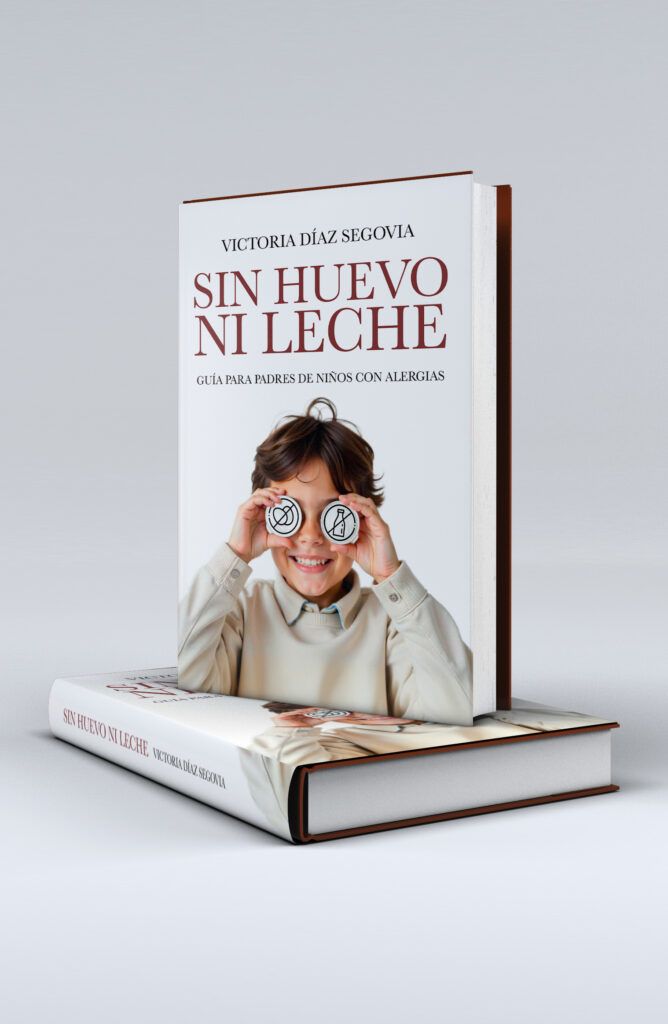
The journey of writing Sin Huevo ni Leche began twelve years ago—without me even realizing it. My son’s food allergies forced me to read every label at the supermarket.
This led me to discover other ingredients hidden in the everyday products in our shopping cart, and it sparked a deep curiosity to learn more about nutrition in order to improve our entire family’s diet.
Nutrition drew me in so completely that it eventually became my profession. Combined with my personal experience managing food allergies at home, it gave me the push I needed to start writing a book.
I’ve tried to capture in this book the answers to all the questions I’ve asked myself over the years, with the goal of helping other families.
Inside, you’ll find key insights to help you better understand allergies, lab tests and diagnostic procedures, as well as available treatments.
I take a deep dive into the nutrients your child may be missing by not consuming dairy or eggs—and how to ensure they get those nutrients from other sources.
I dive into substitute products—exploring which ones make sense to include in the diet, and which are best left out.
As a dietitian, I couldn’t avoid talking about sugars, sweeteners, refined flours, and unhealthy fats. These are ingredients best avoided, and understanding the reasons why can help you make better choices at the supermarket.
I explain what life with allergies looks like, and how we’ve managed it over the past thirteen years—at home, at school, during birthday parties, on trips, and when eating out at restaurants.
And finally, I share all the recipes from our family’s daily menu. If we stop thinking about what children with egg and dairy allergies can’t eat, and focus on what they can, we’ll see they can still enjoy meat, fish, legumes, fruits, vegetables, grains, nuts, and seeds. There are so many possibilities!
These are simple, traditional recipes for everyday cooking, where you’ll also see how to incorporate the substitute ingredients I discuss throughout the book.
I haven’t forgotten those who can’t tolerate gluten—this is something that also affects us at home. Most of the recipes are gluten-free or include a gluten-free whole grain alternative.
And I’ve also kept in mind those following a plant-based diet—70% of the recipes are vegan.
In short, I truly hope this book is helpful to you. If you’d like to ask me something or share your thoughts, I’d love to hear from you.